
Every request is welcome.Safety decides the flight.
Calling for air medical transport is always appropriate when you believe the patient may benefit. Not every request can be completed safely. This page explains why, and what a declined flight means for your crew.
A declined flight is based on safety, patient care and operational limits. It is never criticism of the requesting crew.
If we cannot land safely, we cannot help safely.
Helicopters operate under strict aviation regulations and risk assessment tools. A flight may be declined for any of the reasons below. Select one to see why it matters.
A flight may be declined for
-
Weather must meet legal minimums everywhere the aircraft has to fly: where it is coming from, along the route, at your landing zone and where it will take the patient. Clear skies over your scene are only part of the picture.
-
Darkness hides wires, terrain and obstacles. A landing zone without enough light may not be safe to approach, even when the weather is clear.
-
Wires and poles are hard to see from the air. Rotor wash can lift loose debris into the rotor system or toward people on the ground.
-
The aircraft needs a firm, level area with room to approach and depart safely. A space that works for a vehicle may not work for a helicopter.
-
Pilots and crews work within regulated duty and rest limits. Those limits protect the patient, the crew and everyone on the ground.
-
An aircraft that is not fully airworthy does not fly. Scheduled maintenance and mechanical status are part of every launch decision.
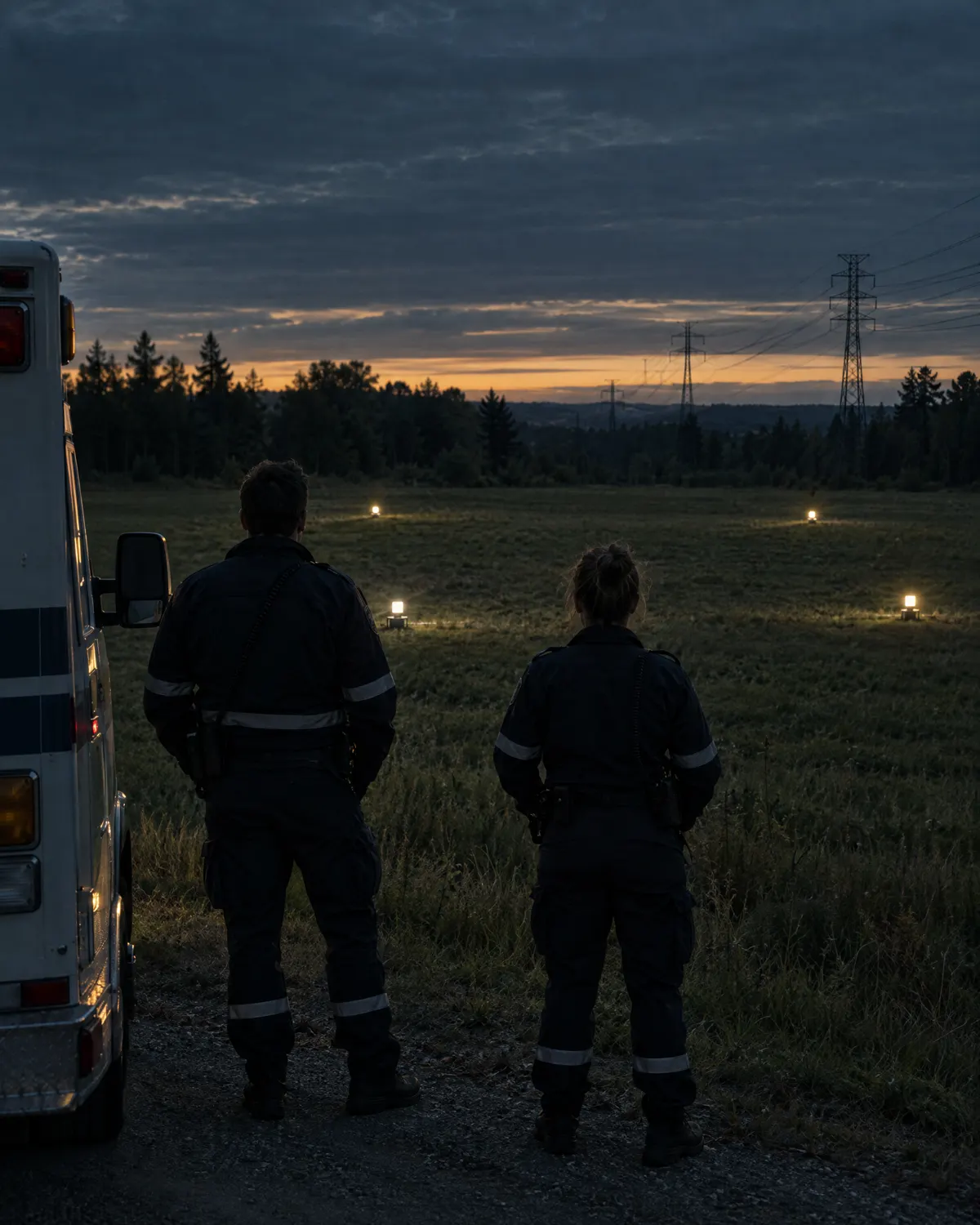
Sometimes the aircraft cannot get there.
Even on a clear day, the aircraft and crew may not be able to reach your patient in time.
-
The aircraft and crew may already be flying or caring for another patient. A second request cannot be accepted until they are available again.
-
Distance, wind and the fuel needed to reach a safe alternate all count. Together they can put a flight out of reach.
-
Every aircraft has weight and balance limits, and the cabin must fit the patient, the crew and their equipment safely. Patient weight and size are part of every acceptance decision.
-
Dense forest, steep terrain or the lack of a safe place to land nearby can keep the aircraft from reaching the patient.
-
If launching, flying to the landing zone and loading would take longer than driving, the helicopter no longer saves time. Ground transport is then the better choice for the patient.

Know the aircraft.
Know where to stand.
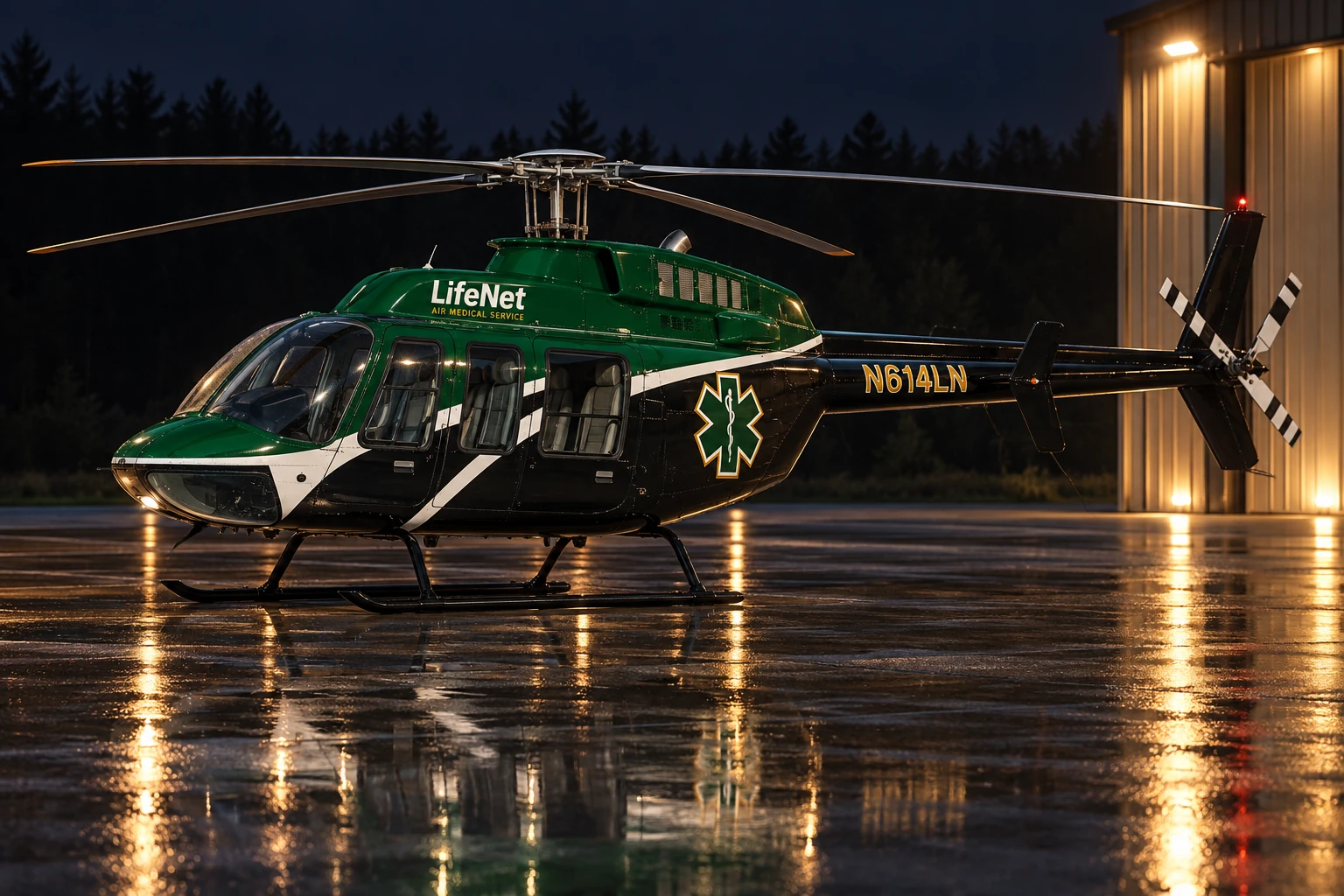
Bell 407
Our helicopter reaches patients where they are: at the scene, at a rural hospital or on a hospital helipad.
- Type
- Single-engine helicopter
- Registration
- N614LN
- Lands at
- Helipads and prepared landing zones
- Scene response
- Yes
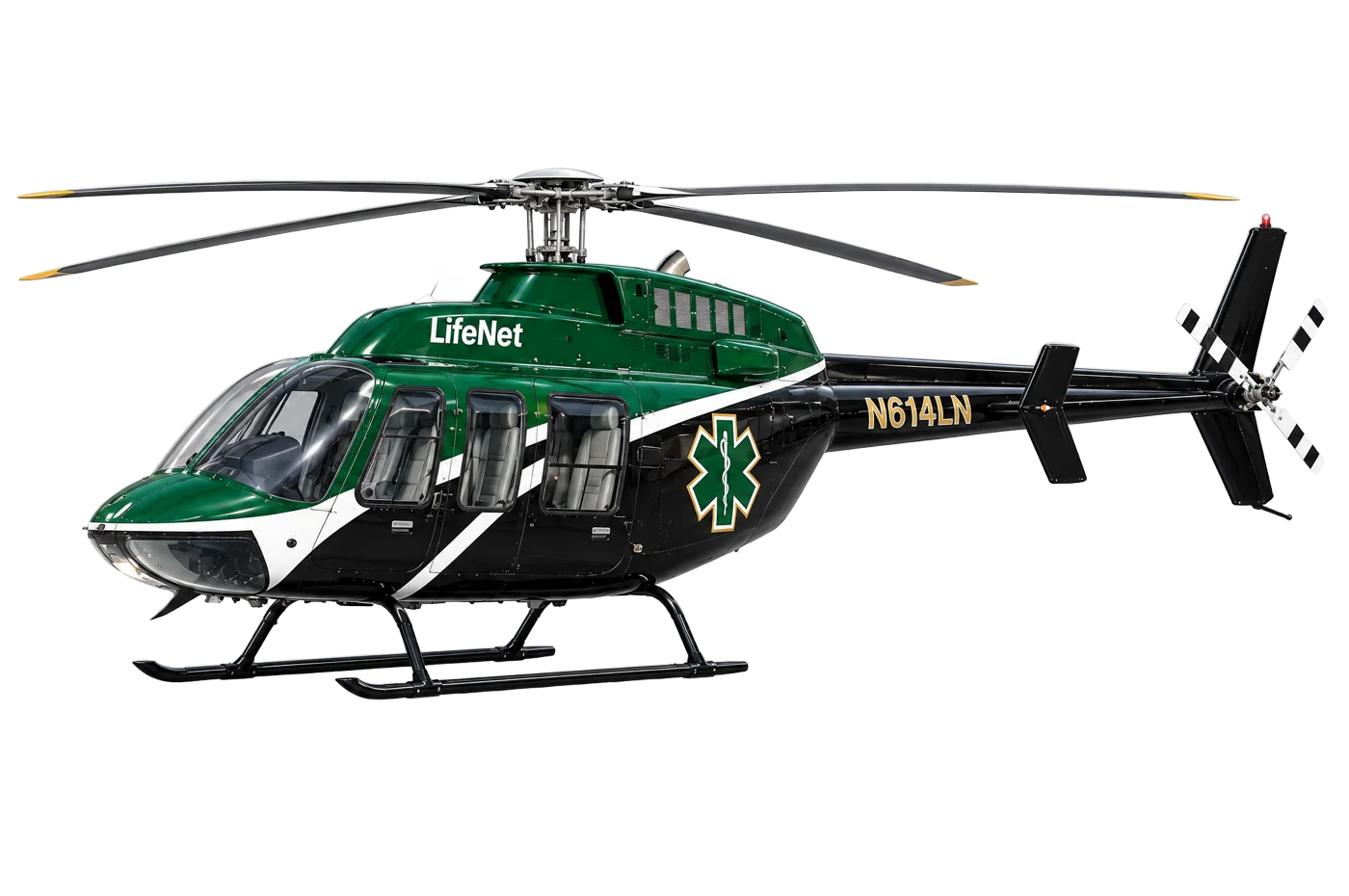
Loading 3D model
Drag to turn · Scroll or pinch to zoom
Select a safety point.
Each numbered point on the aircraft explains what ground crews need to know when working near it.
Six steps on the ground.
One safe landing.
When the helicopter is coming to your scene, your crew prepares the landing zone. Select a step to see it on the plan.
-
Look for an open, level area at least 100 by 100 feet with a firm surface. Fields, parking lots and closed roads often work. Avoid slopes, soft ground, tall grass, loose sand and deep snow.
-
Check every side of the landing zone and the sky above it. Tell the flight crew about any wires or tall obstacles nearby, even ones outside the landing zone. Wires are very hard to see from the air.
-
Remove or secure sheets, blankets, tarps, hats, trash and loose equipment. Rotor wash can throw them into people or into the rotor system.
-
Mark each corner of the landing zone with a steady light. Never aim headlights, spotlights or flashlights at the aircraft: bright light can blind the pilot on approach.
-
Choose one person to talk with the flight crew on the radio channel you are given. Describe the landing zone, the wind and every hazard. The pilot approaches and departs into the wind, so keep both of those paths clear.
-
Keep people and vehicles at least 100 feet away during landing and takeoff, and protect your eyes from blowing debris. Approach only when a crew member signals you, from the front where the pilot can see you. Never walk toward the tail rotor.
Your agency's landing zone protocol and the flight crew's instructions always come first.
Two aircraft.
Two different jobs.
Where is the patient?
These are general patterns, not rules. The Communications Center and flight team decide which aircraft is used for each request.
Choose where the patient is to see which aircraft usually fits.
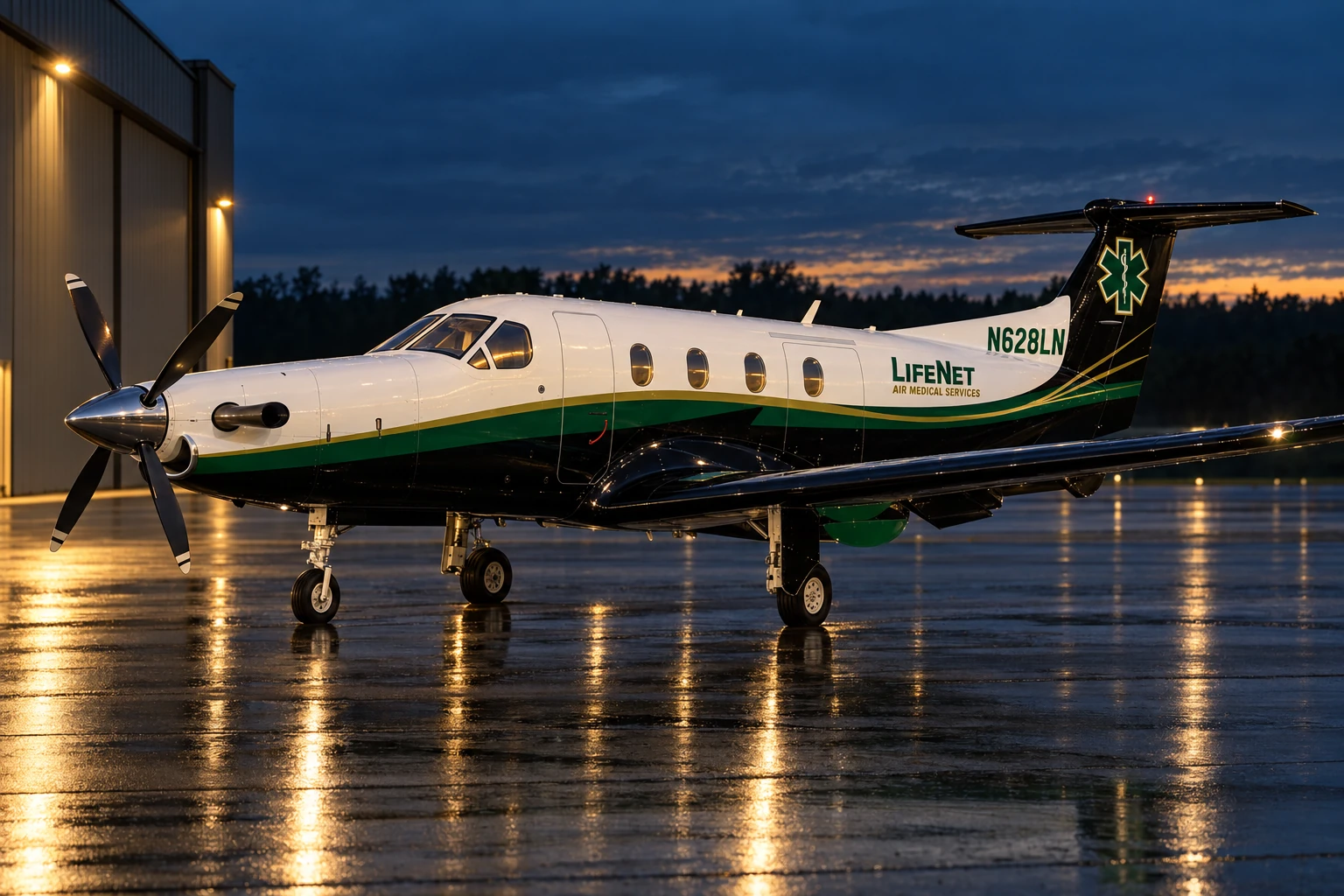
| Question | Bell 407 | Pilatus PC-12 |
|---|---|---|
| Lands at | Helipads and prepared landing zones | Airport runways only |
| Scene response | Yes | No |
| Typical use | Scene calls, and the first choice for regional transfers | Long-distance transfers, and regional transfers when needed |
| Ground ambulance | Usually not needed; it can land at or near the hospital | Needed at both ends of the flight |
Three questions.
Every answer explained.
Choose an answer to see why it is right, or why it is not and what is.
Requesting is never wrong.Declining is never punitive.
- Requesting a helicopter is never wrong.
- Declining a flight is never punitive.
Both decisions are made for one purpose:The safest and best outcome for the patient and the crews.
Contact the flight crew. We are happy to review a flight with you and to educate anytime.
833-611-5433LifeNet Communications Center